
Welcome to the HyperGraphMind Blog
Select a post from the archive, or click the featured story above.
The Reasoning Layer for Enterprise AI Agents — Reasoning you can verify.
The Reasoning Layer for Enterprise AI Agents
Insurance. Healthcare. Mobility. Finance. Every decision proved.
From prompt to autonomous knowledge agent.
 for Startups
|
Cloud Program 2026–2028
·
for Startups
|
Cloud Program 2026–2028
·
 Activate
·
Activate
·
 OKF v0.1
Google's Open Knowledge Format
·
OKF v0.1
Google's Open Knowledge Format
·
 OSI v0.1.1
Apache OSSIE · Snowflake ecosystem (dbt · Cortex)
·
OSI v0.1.1
Apache OSSIE · Snowflake ecosystem (dbt · Cortex)
·
 ·
·
 ·
Imperial College London
·
Imperial College London
2.78µs response · 99.8% accuracy on unseen data · 882ns on-device · 6.55M entities tested · Every decision proved · 3 live apps · Self-improving · Always current
Context layers retrieve. HyperGraphMind reasons and proves.
01 · Context
Always current. Human expertise captured. Self-improving.
02 · Reasoning
Spot new risks the moment they appear. No retraining.
03 · Proof
Show exactly why every decision was made. Signed and traceable.
04 · Governance
Your policies enforced. Automatically. Every decision.
05 · Witness
Every agent action on the record. Nothing hides.
One semantic query across everything.
Databases, documents, emails, Slack — reasoned as one living knowledge graph.
Your Data


PDF · Docs · Email · Slack · Smart Contracts · On-Chain
HyperGraphMind
QUERY · REASON · PROVE
Your Agents
ONE QUERY — EVERYTHING YOUR AGENT NEEDS
Knowledge graph + Snowflake + BigQuery + Docs + On-Chain + Contracts
→ Reasoned. Proved. In one call.
One SQL for all sources · Hyperedge traversal · Inductive scoring · Proof-carrying inference
SIU Investigators · Underwriters · Clinical Teams · Risk Analysts · Protocol Governance · Compliance Officers
Architecture
Knowledge and analytics, unified by reasoning — not stitching.
Knowledge reasoning + Federated analytics = One proved answer
Context finds what's there.
Reasoning finds what's true.
Proof makes it defensible.
Built for the decisions that hold up in any room.
Boardroom, audit room, or courtroom.
How HyperGraphMind compares to alternative approaches.
| Capability | RAG Pipelines | LLM Copilots | Context Layers | HyperGraphMind |
|---|---|---|---|---|
| Retrieval | Yes | No | Yes | Yes |
| Reasoning on new entities | No | Hallucination risk | No | HMRE inductive |
| Proof chains | No | No | No | SHA-256 signed |
| Symbolic governance | No | No | Partial | RETE / Datalog |
| Federated query | No | No | Partial | SQL + SPARQL + vector |
| Audit trail | No | No | Partial | Tamper-proof |
| On-device reasoning | No | No | No | 882ns |
| Open standards | Varies | No | Varies | RDF / OWL 2 / W3C |
A fraudster won't register their embedding. HMRE reasons without one.
Context layers retrieve. HyperGraphMind reasons — the layer above.
Boardroom, audit room, or courtroom. Every decision includes a verifiable proof chain that traces from conclusion to source data through symbolic rules.
Programs · Pedigree · Partners
The programs and institutions that vet ambition before they back it.
CLOUD PROGRAM
Google Cloud for Startups, 2026–2028. Reasoning workloads on Google's infrastructure.
INCEPTION MEMBER
NVIDIA's deep-tech program. GPU-accelerated symbolic reasoning at enterprise scale.
ACTIVATE PARTNER
AWS Activate. Multi-cloud reasoning, available wherever the enterprise lives.

FOUNDING PEDIGREE
Where the mathematics comes from. Engineers and advisors from Imperial College London.
OKF
GOOGLE STANDARD · EXPORTED NATIVELY
Google's Open Knowledge Format v0.1 — the emerging portable graph standard for Google Knowledge Catalog and beyond.
Every certified graph → okf-export · markdown + YAML · one command.
Programs you don't apply for — programs that find you.
Every HyperGraphMind output includes a SHA-256 signed reasoning chain linking the conclusion to source facts through symbolic rules. Not citations. Not summaries. Proof.
Powered by HMRE
HyperGraphMind Reasoning Encoder
Your business changes every day. HMRE keeps up — reasoning about new customers, new products, new fraud patterns the moment they appear in your graph. No retraining. With proof.
The first inductive graph reasoning model.
Built for enterprise.
See it reason. See it prove.
Reasoning where your people work.
Store floor · Warehouse · Bedside · Field · No Cloud · No Latency
882ns lookups · 391K triples/sec · 35–180× faster than alternatives
Your store manager gets the same provable answer as your boardroom.
19 connectors · 6 databases · Any document
Connect. Reason. Prove — across everything you already use.
Databases
Snowflake · BigQuery
Databricks · PostgreSQL
Redshift · DuckDB
Collaboration
Slack · Teams · Confluence
Jira · Miro · Zoom
Enterprise
Salesforce · ServiceNow
Gmail · Google Drive
GitHub · Zendesk
Documents
PDF · Word · PPT
Docs · TXT · Filesystem
No demo scripts. No slideware. Real HyperGraphMind, running live.
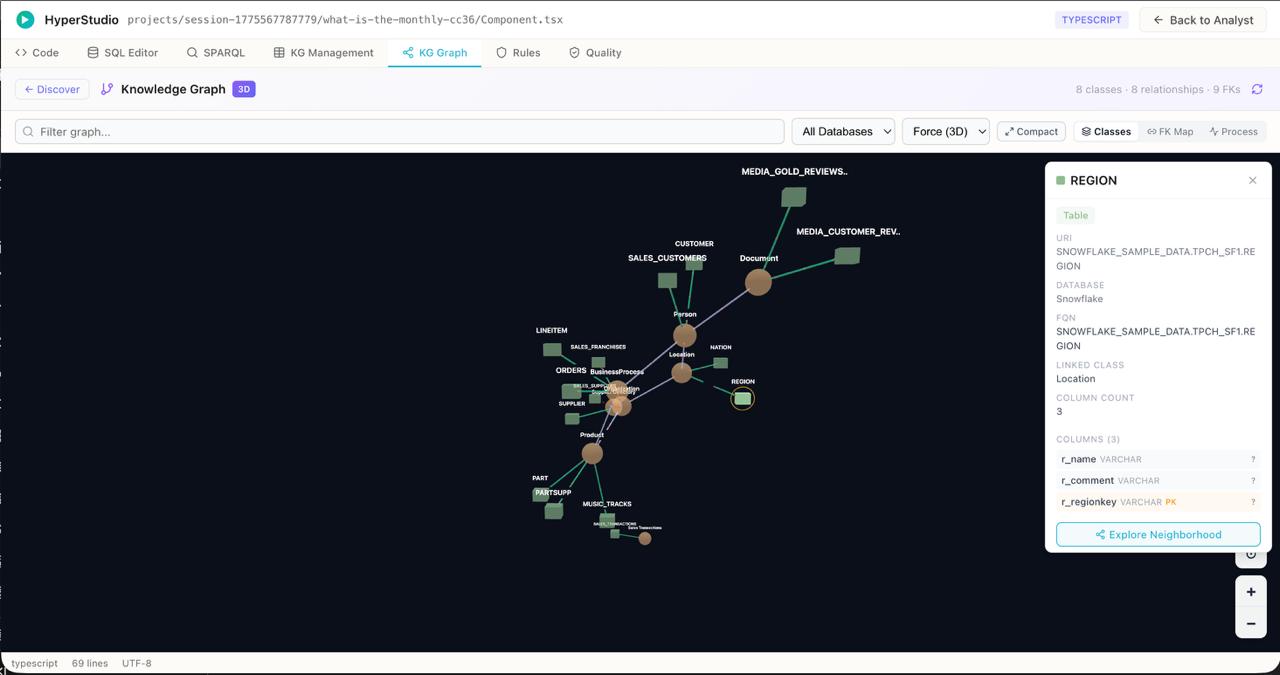
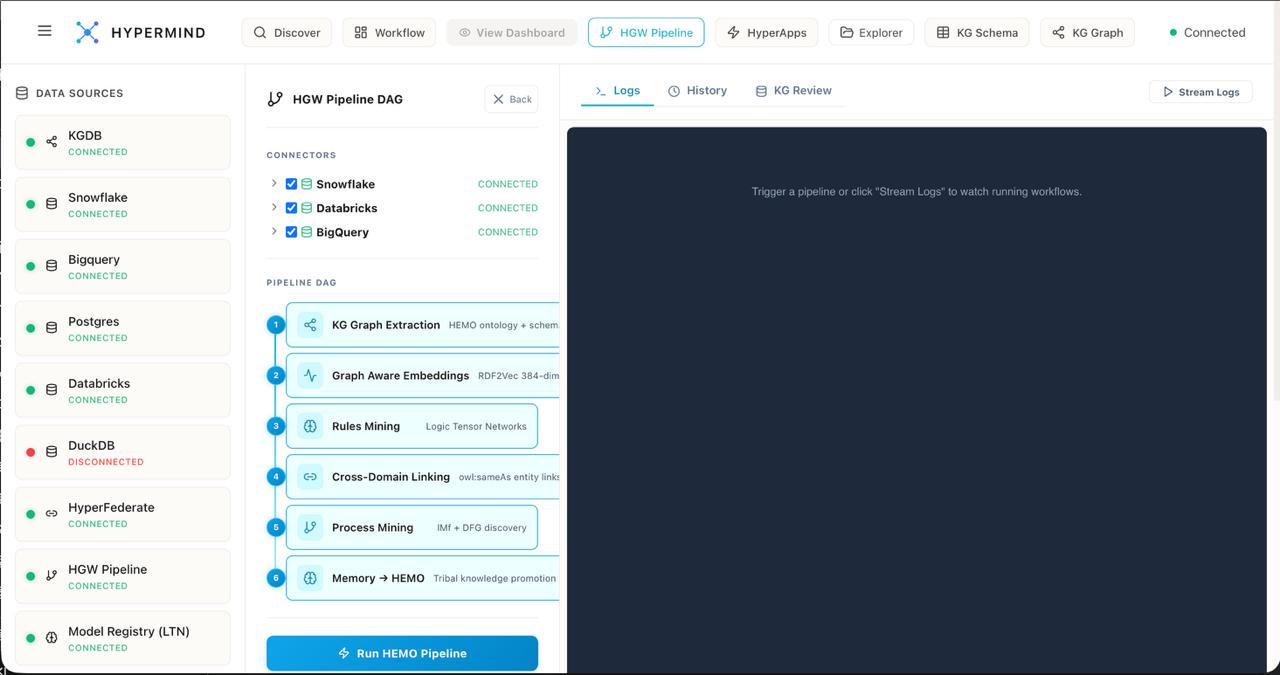
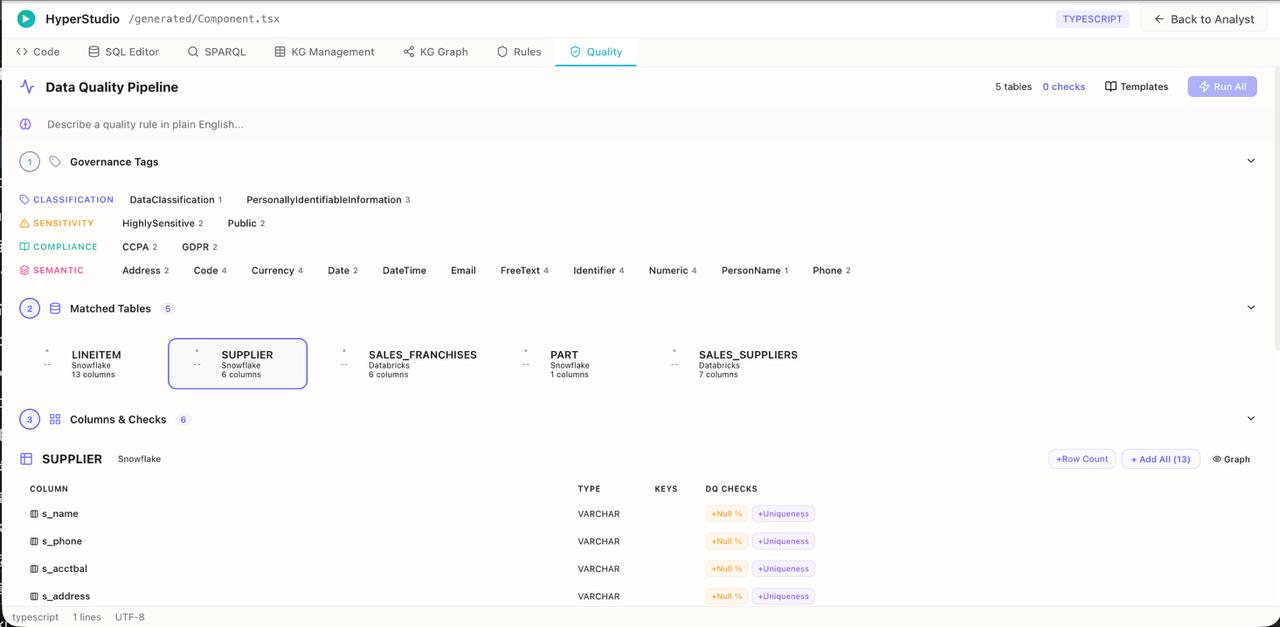
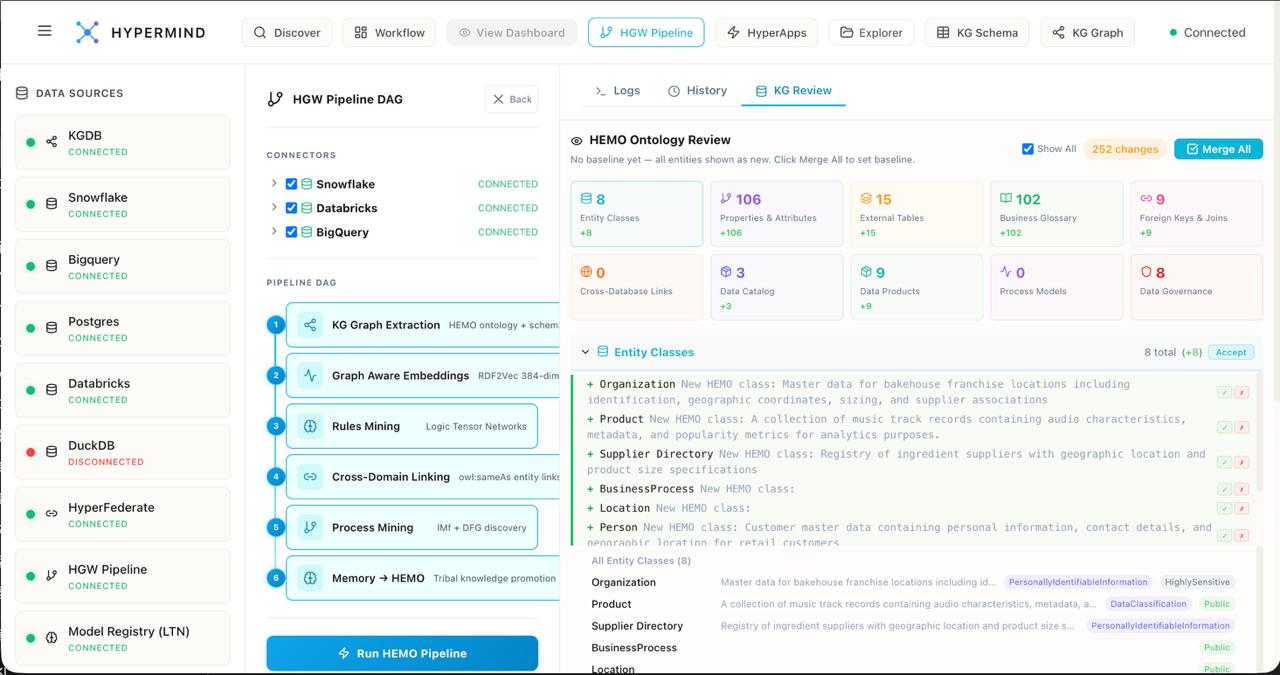
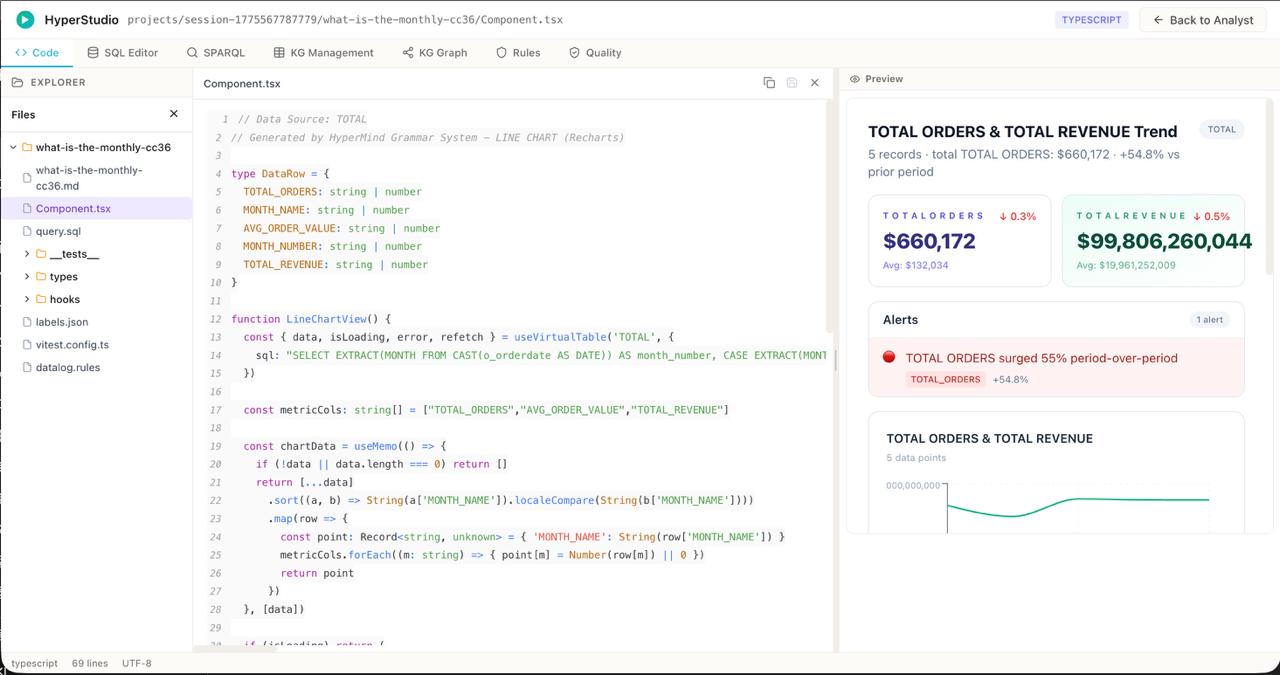
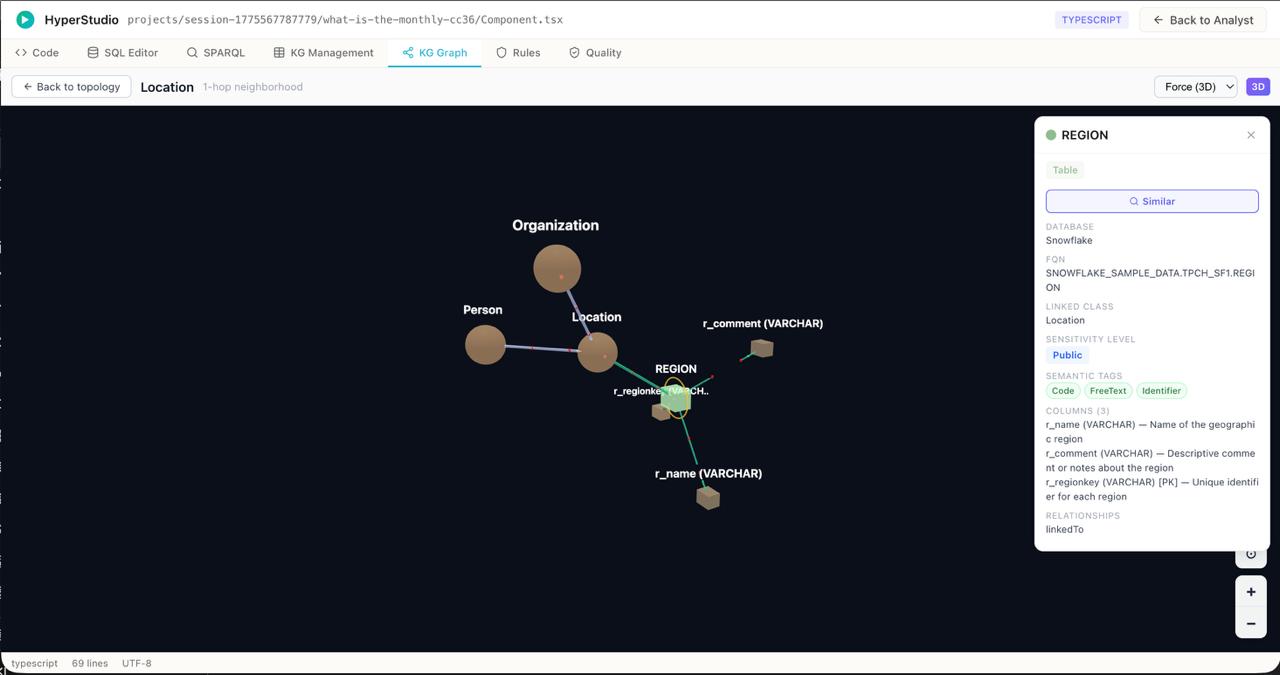
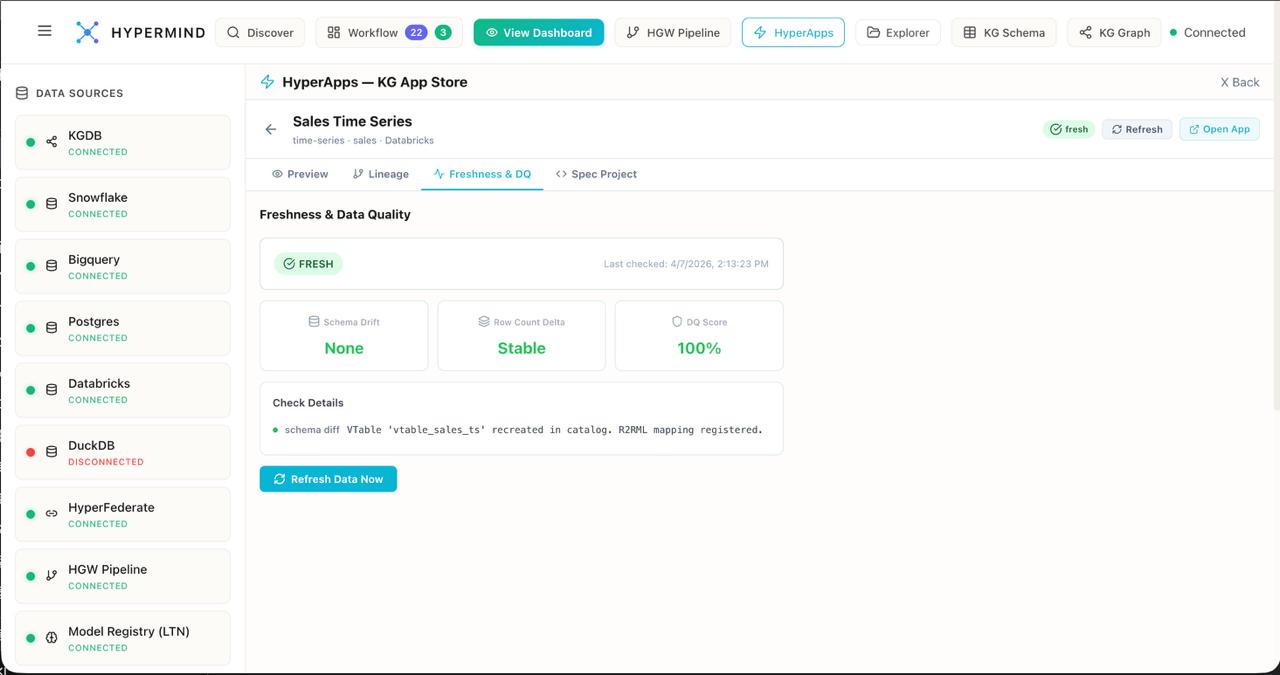
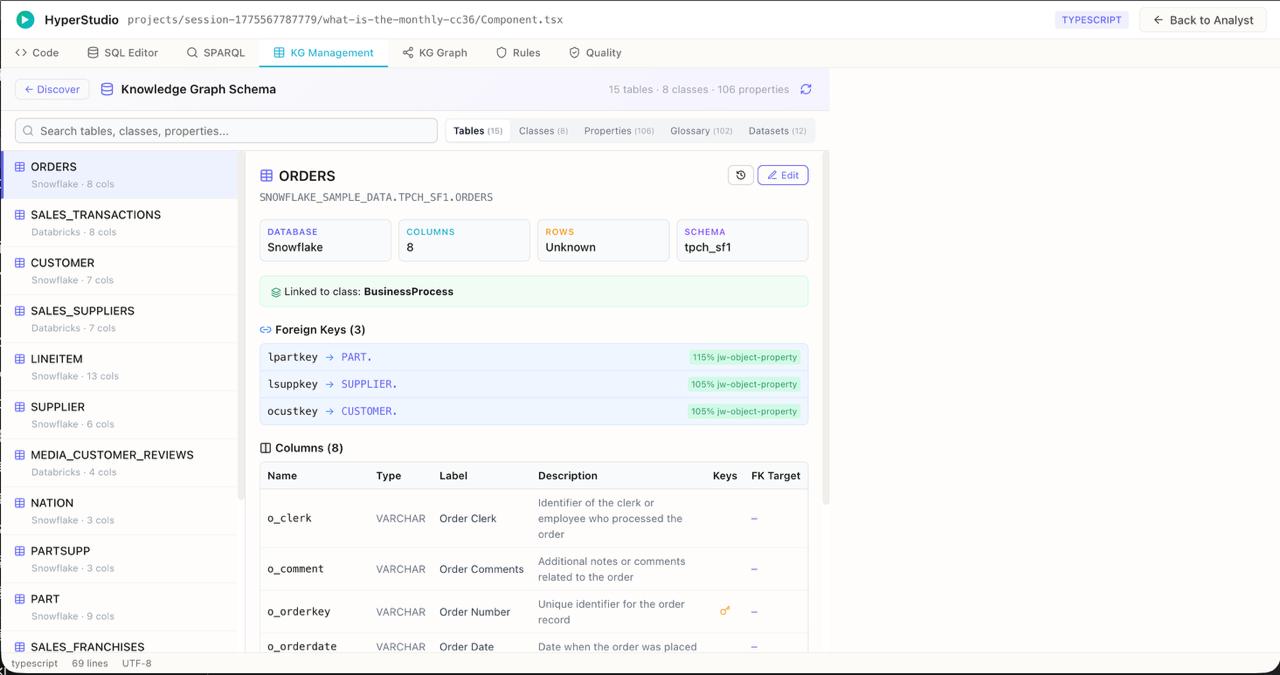
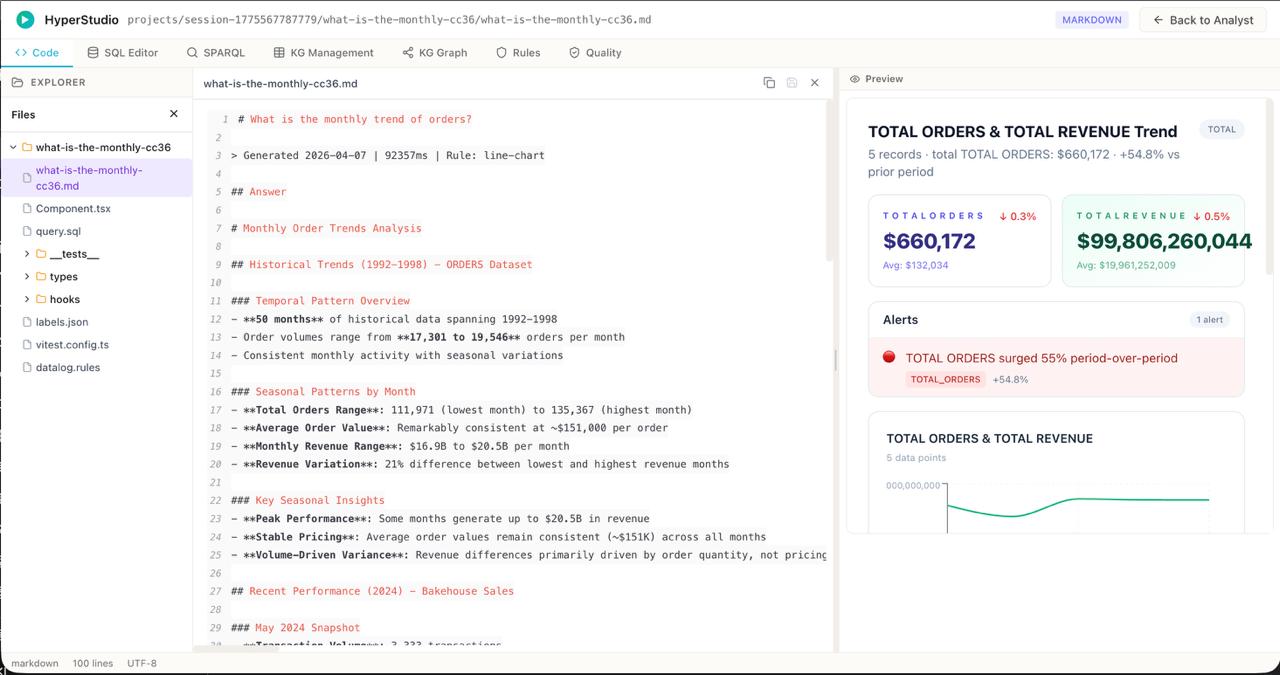
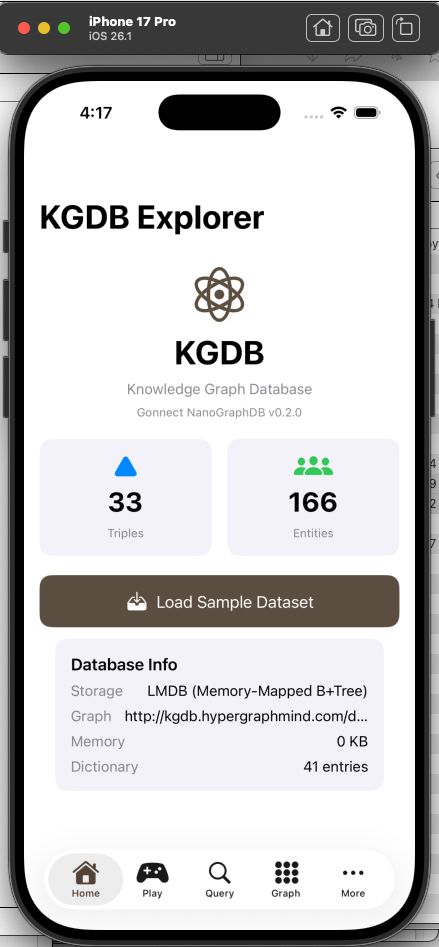
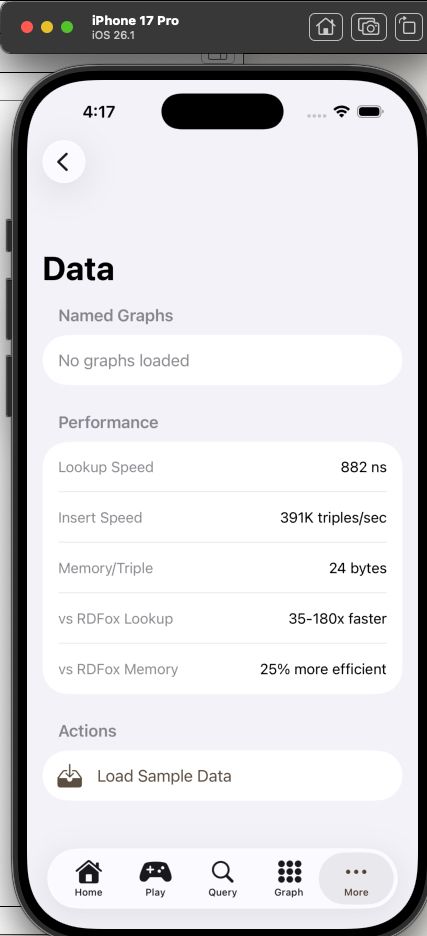
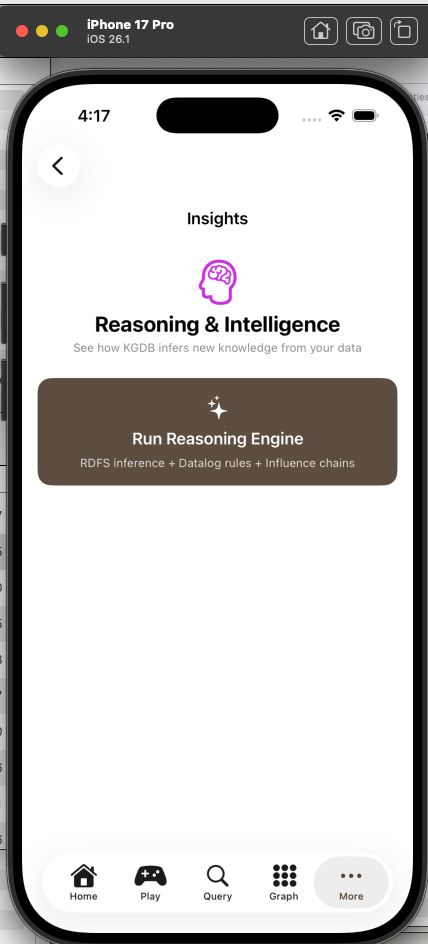
Instant decisions. Every one auditable. Production in days, not months.
Your team stops second-guessing AI · Auditors get answers, not excuses · Compliance becomes confidence
Every industry below shares one truth: decisions must be reasoned, traced, and defended. Not guessed.
If any of these sound like your Monday morning, keep reading.
We built HyperGraphMind to fix exactly these problems.
We solve enterprise decision intelligence at scale.
Problem: Clinicians cross-reference drug interactions, patient history, and guidelines manually.
Reasoning: 29M+ medical triples reasoned across vocabularies in real time.
Outcome: Every recommendation traceable to clinical evidence.
Try live demo → LIVEProblem: Circular payment rings are invisible in flat transaction tables.
Reasoning: Hypergraph connects accounts, merchants, devices, and timing simultaneously.
Outcome: 88.6% MRR. Every flag explainable to regulators.
Try live demo → LIVEProblem: Valuations ignore neighbourhood context, planning data, and market signals.
Reasoning: Property records, trends, and local context linked in a knowledge graph.
Outcome: Valuations backed by traceable evidence chains.
Try live demo →Powered By
Hypergraph storage. Graph embeddings. Open standards.
Distributed. Scalable. Secure. Governed.
Problem: KYC checks span dozens of disconnected systems. Compliance officers stitch answers manually.
Reasoning: Customer data, transaction history, sanctions lists, and beneficial ownership reasoned as one connected graph.
Outcome: Audit-ready compliance decisions with full decision lineage.
Problem: Customer behaviour spans loyalty programmes, transactions, browsing, support tickets, returns. Marketing teams can't connect why one cohort churns while another doubles spend.
Reasoning: Customer interactions, product affinities, transaction patterns, and merchandising rules modelled as one connected knowledge graph. HMRE discovers cohort patterns and pricing dynamics never explicitly programmed.
Outcome: Every promotion, recommendation, and churn signal traced to its evidence. Decisions defensible to the merchandising committee and the regulator.
Problem: Support agents lack connected context — customer history, product rules, and resolution paths live in separate silos.
Reasoning: Customer knowledge graph connects interactions, products, policies, and resolution logic into one reasoning layer.
Outcome: Agents get proved, auditable answers — every response traced to source.
Problem: Black-box neural networks make life-critical decisions with no explanation.
Reasoning: Sensor data, road rules, and environmental context reasoned over simultaneously.
Outcome: Every driving decision has a full derivation chain — perception to action.
View example →Problem: Underwriters juggle policy documents, risk tables, and regulatory requirements across disconnected systems.
Reasoning: Policy rules, claim history, and risk factors encoded as symbolic rules on a knowledge graph.
Outcome: Every underwriting decision fully traceable to its regulatory basis.
Problem: IoT data floods dashboards but nobody connects cause to effect.
Reasoning: Sensors, building systems, and operational rules form a living knowledge graph.
Outcome: Real-time reasoning over energy flows, occupancy, and maintenance.
View example →Problem: Disruptions cascade because no system connects supplier tiers, inventory, and logistics constraints.
Reasoning: Multi-tier supplier graph with constraint propagation and impact analysis.
Outcome: Catch disruptions before they cascade. Every decision defensible.
Problem: Lawyers spend days tracing precedent chains that AI hallucination makes worse.
Reasoning: Case law navigated as a knowledge graph with verified citation links.
Outcome: Every legal conclusion linked to its source authority.
View example →Problem: Collaborative filtering recommends without understanding why.
Reasoning: Influence networks, genre relationships, and behaviour mapped into a connected graph.
Outcome: Recommendations that explain why — not just what.
View example →How organisations use HyperGraphMind to transform decision-making with provable AI.
Autonomous vehicles must make split-second decisions that are explainable, auditable, and legally defensible. Every decision needs a traceable reasoning chain.
Neural networks make predictions but cannot explain why. When accidents occur, manufacturers face liability without being able to demonstrate the decision logic.
HyperGraphMind's neuro-symbolic architecture combines perception (neural) with reasoning (symbolic). Every driving decision includes a proof chain: detected objects, applicable traffic rules, and the logical inference that led to the action.
Query across Snowflake, CRM, and enterprise data sources with a single semantic layer. HyperFederate unifies disparate systems without data movement.
Enterprise data lives in silos—Snowflake for analytics, CRM for customer data, legacy systems for operations. Cross-system queries require expensive ETL pipelines and duplicate data.
HyperFederate creates a unified semantic layer across all data sources. Query once, get results from everywhere. Zero data movement, real-time federation with sub-second response times.
Semantic SPARQL rules automate complex insurance discount calculations based on policy bundling. Business logic encoded as graph patterns with conditional pricing rules.
Insurance pricing requires complex conditional logic across policy relationships. Traditional systems hardcode discount rules, making changes expensive and error-prone.
SPARQL CONSTRUCT queries with GROUP BY aggregation count policies per business. BIND/IF conditional logic applies tiered discounts (20% for 2+ policies, 10% for single policy). Rules are declarative and auditable.
A regional hospital network needed to reduce diagnostic variability while ensuring clinicians understood AI recommendations—critical for patient safety and liability.
Previous ML models provided predictions without explanation. Clinicians couldn't verify reasoning against medical literature, creating liability concerns and low adoption rates.
HyperGraphMind encodes clinical guidelines (SNOMED CT, ICD-11) as formal ontology. Recommendations trace back to specific guidelines, patient history, and contraindications—viewable in natural language explanations.
A payments processor handling £2B+ daily transactions needed to detect sophisticated fraud rings while reducing false positive rates that were overwhelming investigation teams.
Traditional rule-based systems generated 85% false positives. ML models detected anomalies but couldn't explain why—a regulatory requirement under FCA guidance.
HyperGraphMind's graph motif detection identifies circular payment patterns, velocity anomalies, and network structures. Each alert includes complete transaction chain with proof of why pattern triggered—satisfying both detection accuracy and regulatory explainability.
Global payment networks are migrating from legacy MT messages to ISO 20022 (MX). Knowledge graphs enable semantic translation, validation, and compliance tracking across message formats.
SWIFT's November 2025 deadline requires banks to support ISO 20022 for cross-border payments. Legacy MT103/MT202 messages must map to pacs.008/pacs.009 with richer data fields. Manual mapping is error-prone and lacks traceability for regulatory audits.
HyperGraphMind encodes ISO 20022 message definitions as OWL ontology with FIBO (Financial Industry Business Ontology) alignment. SPARQL CONSTRUCT queries transform MT→MX with full field-level lineage. OWL 2 RL rules validate business constraints (BIC codes, IBANs, currency rules) with proof chains for compliance.
# MT103 → pacs.008 semantic transformation
CONSTRUCT {
  ?payment a iso20022:CustomerCreditTransfer ;
    iso20022:instructionId ?instrId ;
    iso20022:amount ?amt ;
    iso20022:creditorAgent ?creditorBIC .
}
WHERE {
  ?mt103 swift:field32A ?amt ;
         swift:field57A ?creditorBIC .
}
Ready to see how HyperGraphMind can transform your operations?
Request Technical WalkthroughHyperGraphMind transforms fragmented data into structured context that AI can reason over, enabling:
AI that can explain why, not just predict what.
Connect and retrieve context
Apply rules, logic, and proof chains. Return decisions you can explain and audit.
Works on top of your existing data, KG, or RAG pipelines — no rip-and-replace.
Context suggests. Reasoning proves.
A fraudster won't call your system to register their embedding.
So we built reasoning that doesn't need one.
HMRE — world's first HyperGraph-native inductive reasoning model. Proprietary.
Data is fragmented. Decisions are not traceable. Regulators are watching. The EU AI Act is here.
HyperGraphMind connects data, logic, and decisions into a single reasoning layer.
How it works
From raw data chaos to auditable intelligence — in one platform.
See it reason
LLMs hallucinate. RAG retrieves but can't reason. HyperGraphMind is the structured reasoning layer that makes AI trustworthy at enterprise scale.
Built for regulated industries — insurance, finance, healthcare — where every decision needs a chain of custody. And for agentic pipelines that can't afford a wrong step.
Read the architecture →The mathematical structure that captures real business relationships—all at once.
Intelligence that reasons, not retrieves. Proof chains, not guesses.
Your data is already connected. Your tools just forgot how to see it.
So how does this change your Monday morning?
One knowledge graph. Every graph language. Reasoning that survives translation.
HyperGraphMind is a typed knowledge-graph substrate that ends the oldest split in graph technology — RDF vs. property graphs. You model your domain once against a strongly-typed ontology kernel, and HyperGraphMind projects it natively into both worlds: W3C RDF-star / SPARQL 1.2 for semantics and standards alignment, and ISO/IEC 39075 GQL for analytics and application development. No lossy converters. No parallel models drifting apart.
What makes this more than format conversion: the reasoning travels with the graph. Typed recursive rules, incremental Datalog inference, SHACL validation, and a dual-gate certification — symbolic and learned — evaluate the same semantics regardless of projection. Every certified release is checked for byte-equivalent results across storage backends. Where others assert compatibility, HyperGraphMind certifies it.
Built for the enterprise knowledge layer: federated live access to your warehouses and document corpora — never copied, always source-of-record. Provenance and data-governance vocabularies — W3C PROV · DCAT · DPV — woven into every fact.
HMRE stores no per-entity embeddings. It reasons from graph structure alone — scoring unseen entities through their connections. A model trained on one set of entities works immediately on another. A fraudster won't call your system to register their embedding.
Traditional databases store rows. Graph databases store pairs. HyperGraphDB stores hyperedges — one edge captures the full business event, connecting accounts, merchants, and devices as a single relationship. Microsecond-scale lookups. Distributed, certified exact at nearly 10 billion triples on commodity ARM.
Every reasoning chain SHA-256 signed. Business rules compile to SHACL and Datalog. Provenance, catalog, and privacy vocabularies — W3C PROV · DCAT · DPV — woven into every fact. Dual-gate certification — symbolic and learned — before anything is promoted to production.
One query across warehouses, lakes, documents, and the graph. HyperFederate joins Snowflake, BigQuery, Databricks, and HyperGraphDB in a single statement. Data stays where it is — always source-of-record. No ETL. No data movement.
One typed ontology kernel. Two native projections — W3C RDF-star / SPARQL 1.2 for standards alignment, ISO/IEC 39075 GQL for analytics and applications. Every certified release is checked for byte-equivalent results across storage backends. Where others assert compatibility, HyperGraphMind certifies it.
HEMO — our epistemological meta-ontology — defines how enterprise knowledge is structured. A principled framework for what can be known, how it relates, and how it's proved. Proof chains extend from application to kernel.
A doctor doesn't memorise every patient. They understand how diseases, symptoms, and treatments relate — then reason about any patient they meet. We built AI that works the same way.
The same reasoning engine. Different domains. Each one previously considered too complex for AI alone.
Rust-native. Proprietary. Inductive.
One platform. Every domain.
The enterprise story on one page. Every source federated, every ontology discovered, every fact certified, every answer explainable — sitting on one substrate, exported to the standards you already use.
Model once against a typed ontology kernel. HyperGraphMind projects it natively into both worlds — W3C RDF-star/SPARQL for standards, ISO/IEC 39075 GQL for analytics and apps. No lossy converters. No parallel models drifting apart.
Your warehouses, documents, and feeds all become tables. HyperFederate is the one endpoint that reads them. Your BI reads it. And your knowledge graph — built by HyperGraphWeaver on top of HyperFederate — reads it too.
Write your queries, your rules, and your business objects once. Swap the backend whenever your CIO changes their mind. The code doesn't change.
The store is replaceable. The typed layer is yours.
One substrate. One certified graph. One story — from your data to your outcomes.
Every fact typed. Every version signed. No raw strings cross a stage boundary.
Seven products. One certified graph. No raw strings cross a stage boundary.
Federate warehouses, lakes, APIs, and documents into a single strongly-typed certified graph. Every fact typed. Every version signed. Every answer explainable.
No raw strings cross a stage boundary — extending the ontology enriches every downstream stage without changing a line of code.
The nucleus of our platform. HyperGraphMind — not just a database. Every product runs on this core: reasoning, memory, and ontology in one Rust engine.
The fastest W3C-compliant graph database. Built in Rust for zero-copy performance.
Turn any certified HyperGraphMind graph into a live Palantir Foundry reasoning ontology — with no forward-deployed engineer. Four screens. Zero code.
Powered by HyperGraphMind (HyperGraphDB) — the neuro-symbolic reasoning engine. Every action is type-checked, every decision is traceable, every outcome is verifiable.
Built on Category Theory, Type Theory, and Proof Theory. HyperGraphMind Agent reasons deductively over knowledge graphs stored in HyperGraphDB, ensuring correctness by construction with full derivation chains.
perceive(world) → typecheck(action) → prove(conclusion) → act(decision)
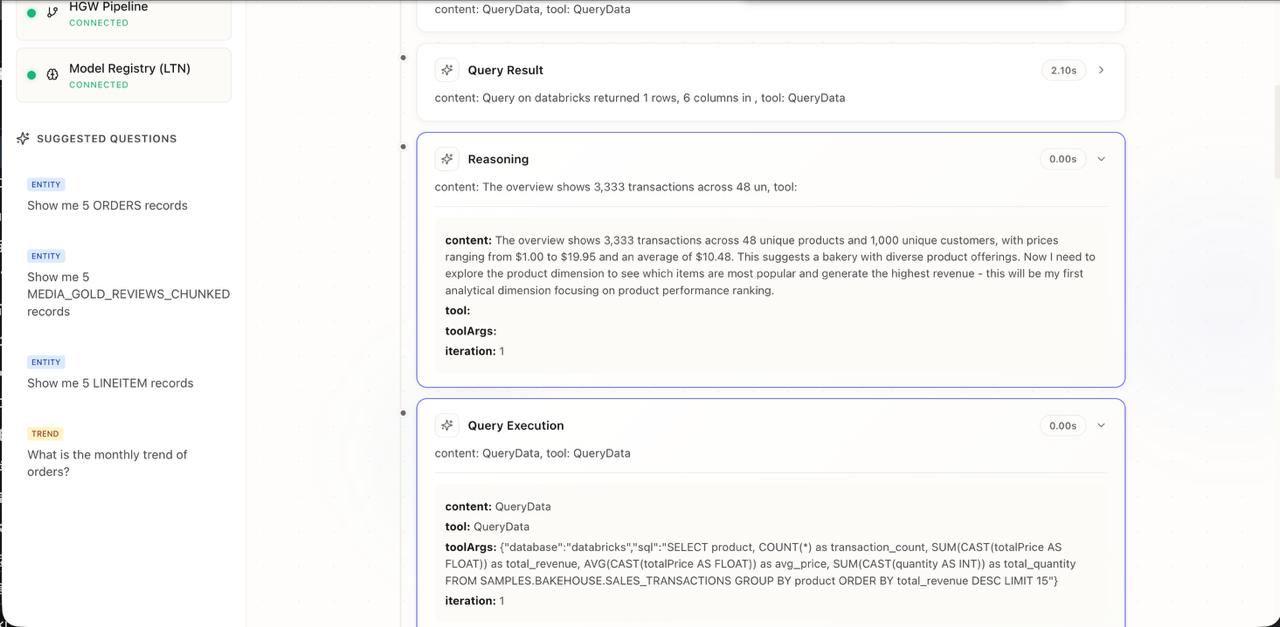
Every step is logged to HyperGraphDB with full lineage. Traditional AI agents are black boxes. HyperGraphMind Agent is white-box by design.
Query your Knowledge Graph + Snowflake + BigQuery + Databricks in a single SPARQL statement. No ETL. No data movement.
Zero ETL pipelines. Zero data copying. Zero maintenance. Just query.
HyperGraphMind Reasoning Encoder (HMRE) reasons over knowledge graphs the way mathematicians prove theorems — by following the structure of relationships, not memorising answers. HMRE scores every entity in a 29M+ triple knowledge graph without storing a single per-entity embedding. New entities, new domains, new data — it generalises instantly, no retraining required. Proprietary inductive reasoning architecture, validated at enterprise scale.
HMRE doesn't memorise answers — it reasons through the graph structure to find them. Even for entities it has never seen before.
Turn your enterprise data into a certified, queryable, reasoned graph — automatically.
Point HyperGraphWeaver at Snowflake, BigQuery, Databricks, Postgres — 30+ sources. It writes your business vocabulary from the data itself: concepts, relationships, facts. Grows and learns continuously. No committee. No schema wall.
Similar things find each other. Every entity gets a learned representation from its position in the graph — so semantic search, recommendations, and cross-domain matching just work. Inductive by design: new entities never break the model.
Soft judgments where hard rules can't reach. Every derived fact carries a confidence score, and learned patterns become first-order rules a business analyst can read. Neuro-symbolic — explainable end to end.
Your enterprise data → discovered, ratified, versioned. Proven — not asserted.
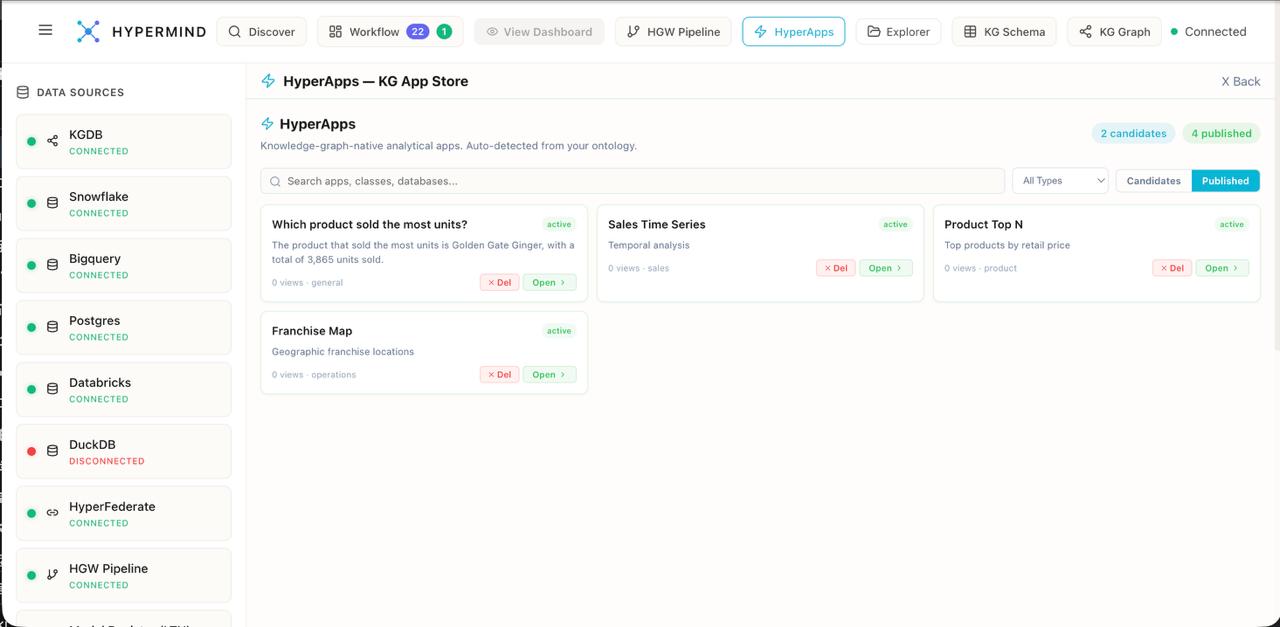
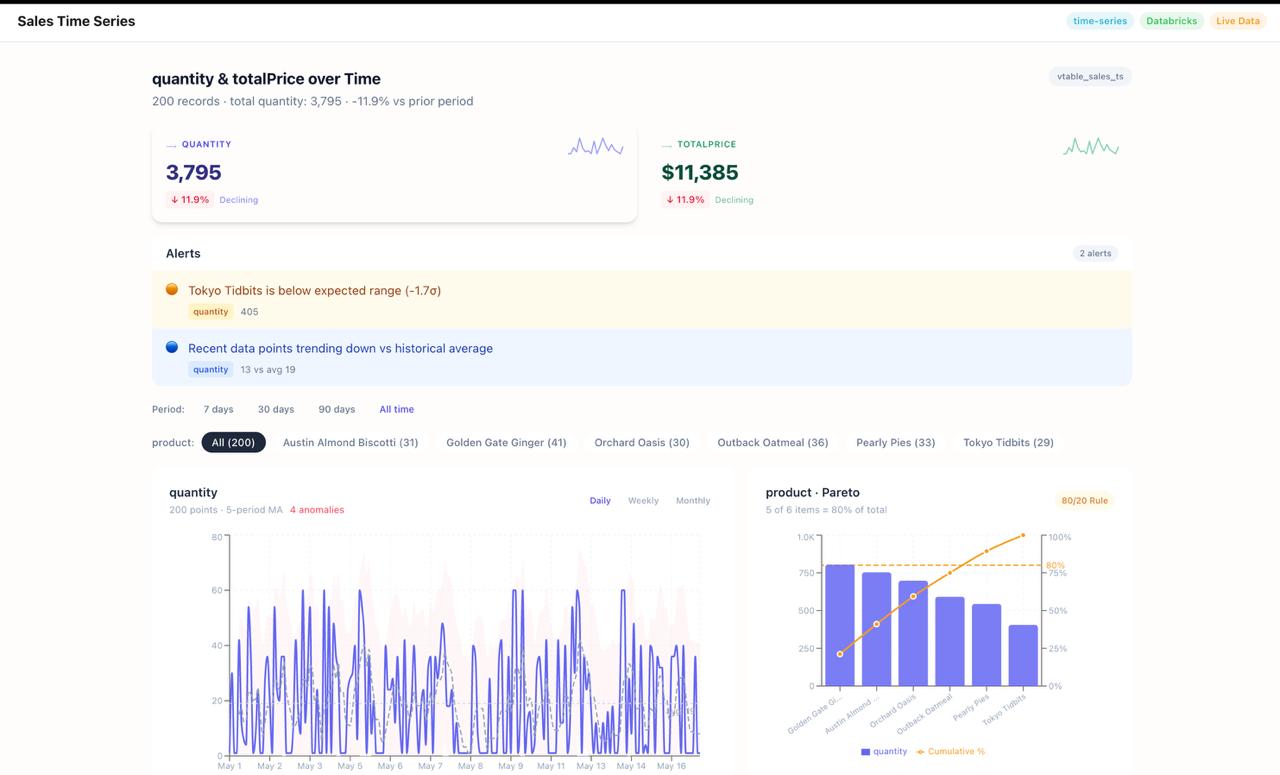
Describe what you need in plain English. HyperCoder compiles it into a production application — wired directly to your live knowledge graph via HyperFederate. Not a template engine. A grammar-driven AI compiler that generates type-safe, AST-validated code from your enterprise ontology.
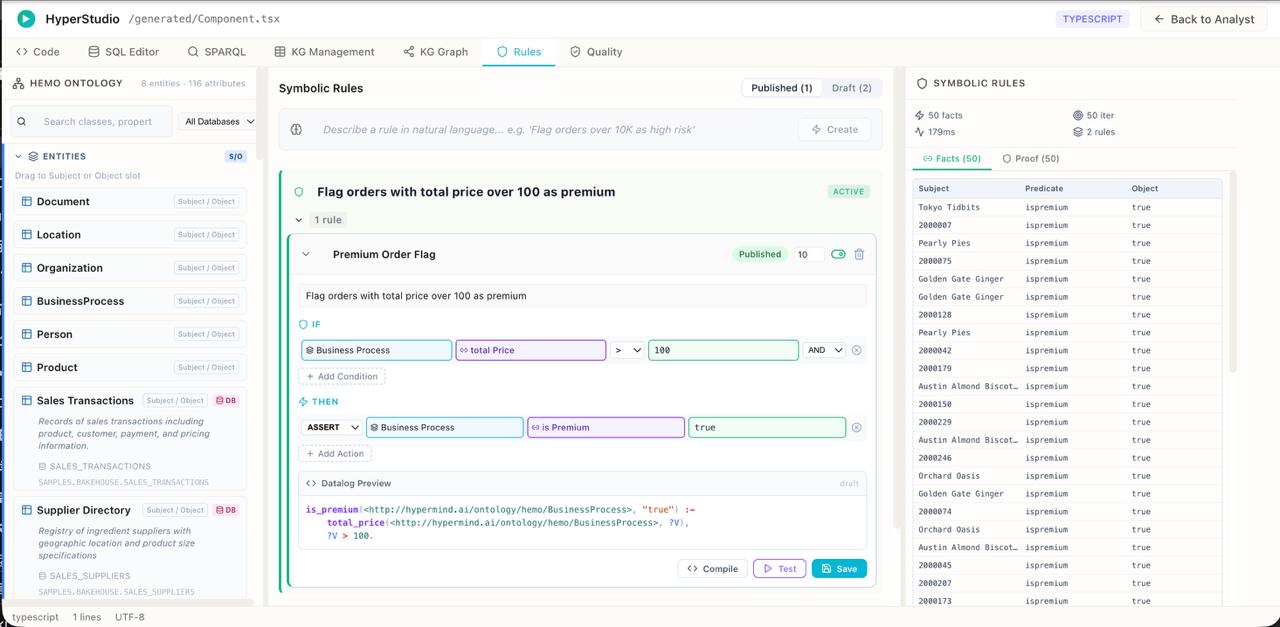
Your business rules, visual. Drag entities from your knowledge graph. Drop them into reasoning pipelines. Compile to executable logic. Every rule intercepts every query — grounded in your actual data via HyperFederate, not hallucinated by an LLM.
Human-in-the-loop feedback loop. Analyst validates → AI learns → Knowledge Graph grows. Your corrections stay forever.
Every prompt.
Every file.
Every call.
One signed record.
Audit-ready · Tamper-proof
Your AI agents make thousands of decisions a day. HyperSentinel gives you one signed record of every single one — captured beneath the application, where agents can't erase their tracks. Audit-ready. Tamper-proof. Invisible to deploy.

Building neuro-symbolic AI infrastructure enterprises can trust. 25+ years in the trenches at product companies like Oracle — shipping data platforms, knowledge graphs, and rule engines. Had the privilege of serving as Distinguished Engineer, Chief Architect, and various leadership roles along the way, helping power launches at global brands and co-founding products that found new homes with industry leaders. Still learning, still building.
Leads Android Application Framework at Google, architecting secure and scalable agent frameworks across OEM ecosystems. Expert in trusted on-device execution and edge AI deployment.
Thoughts on AI, knowledge graphs, and building trustworthy systems
I received opportunities from frontier AI laboratories and major internet platforms. I refused them all. Here's why building HyperGraphMind matters more than joining the giants.
Select a post from the archive, or click the featured story above.
HyperGraphMind at a glance
Have a question or want to explore how HyperGraphMind can help? We'd love to hear from you.
Prefer email? Reach us at contact@hypergraphmind.com